How THUG's business resale market transfers a company
From awkward ownership handoffs to a market that transfers a real company—with choices and consequences on both sides.
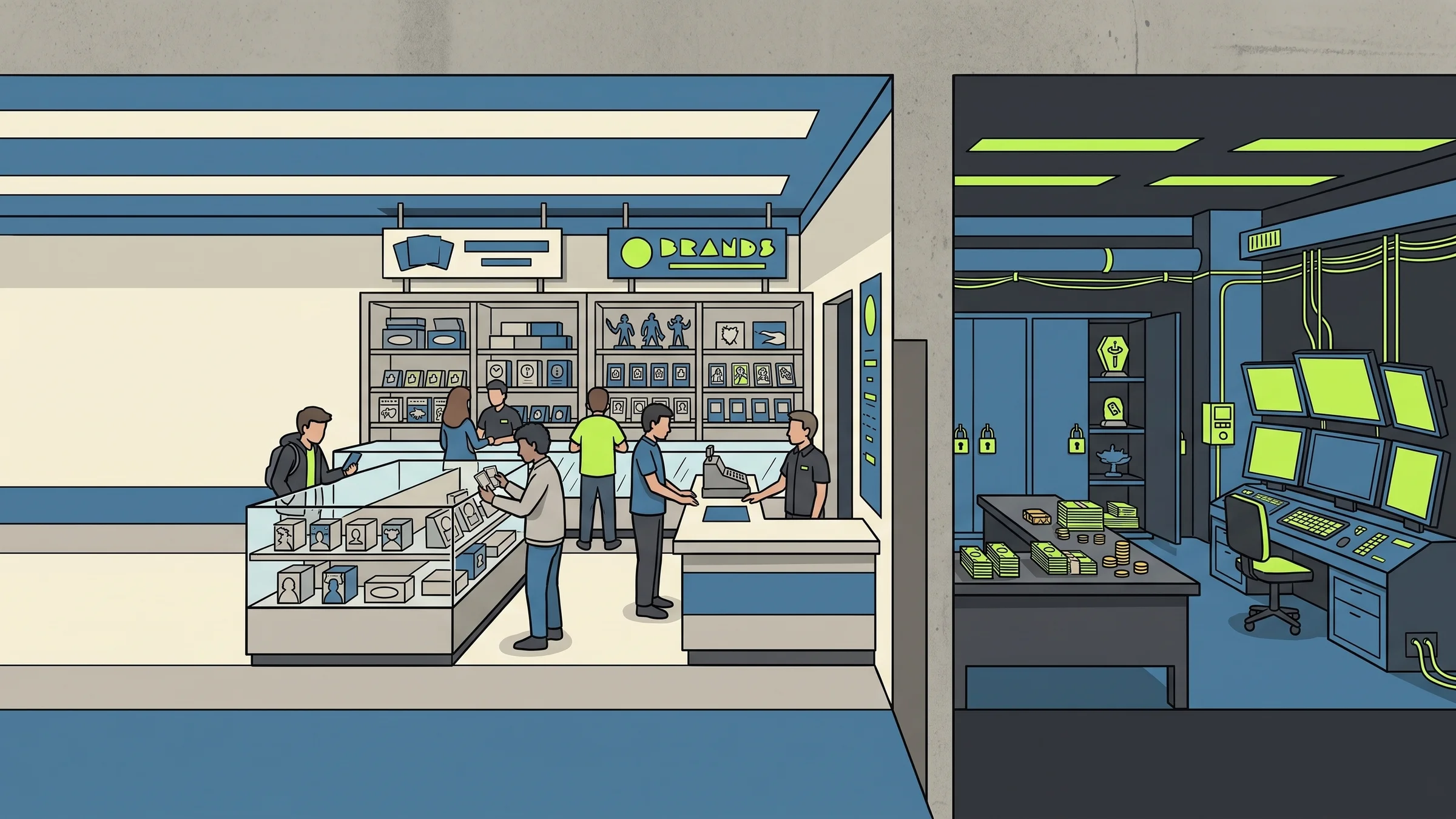
Persistent worlds create a boring-sounding problem that ruins immersion when ignored: what happens when a player no longer wants a company that still exists in the city? THUG's resale market is our answer—transfer the operation, not just the name on a deed.
The problem: ownership without an exit
If a business can only be abandoned or deleted, the city fills with hollow shells or players feel trapped in bad acquisitions. If transfer is a hidden admin favor, the economy stops being a player system.
We needed a public path where capital, locations and operational state could move between characters without breaking the simulation's continuity.
What players could do before
Workarounds existed in spirit—informal handoffs, stripping assets, walking away—but they punished honest exits and rewarded people who treated locations as disposable skins.
Those patterns also confused the living city. Staff, inventory and district presence need a clear owner of record for cycles, payroll and risk to remain coherent.
How the new system works
The resale market lists a company for transfer. Settlement moves ownership of the business entity and its attached operational state to the buyer under market terms. The city keeps one continuous operation instead of spawning a clone or erasing history.
Listings and settlement are designed to be readable: sellers commit to an asking posture; buyers commit capital; the world records the change like any other economic event.
- Public listing instead of private fiat
- Ownership transfer of the living operation
- Capital and obligations remain part of the story
Player choices and buyer risk
Sellers choose when to list, how to present the site and whether to keep the operation healthy until transfer. Buyers choose price tolerance, due diligence depth and how aggressively to restaff or restock after takeover.
Risks to the buyer remain intentional: thin inventory, restless staff, local heat attached to patterns you did not create and a cash need larger than the purchase price. The market transfers opportunity and liability together.
What is next: tighter market signals, clearer pre-purchase inspection of operational health and more ways for organizations—not only individuals—to participate cleanly in ownership changes as Family and crew economies deepen.
Questions from the street
Is resale just renaming a business?
No. It transfers the company and operational state so the city simulation stays continuous.
Why keep buyer risk after purchase?
Because a risk-free takeover would erase consequence. Due diligence and post-sale stabilization are part of the strategy.
Will organizations get more resale tools?
That is on the roadmap as crew and Family economies continue to share the same ownership layer.