
Why THUG's legal and illegal economies share one system
Businesses and street trade are not separate minigames. They compete for the same people, vehicles, storage, capital and attention.
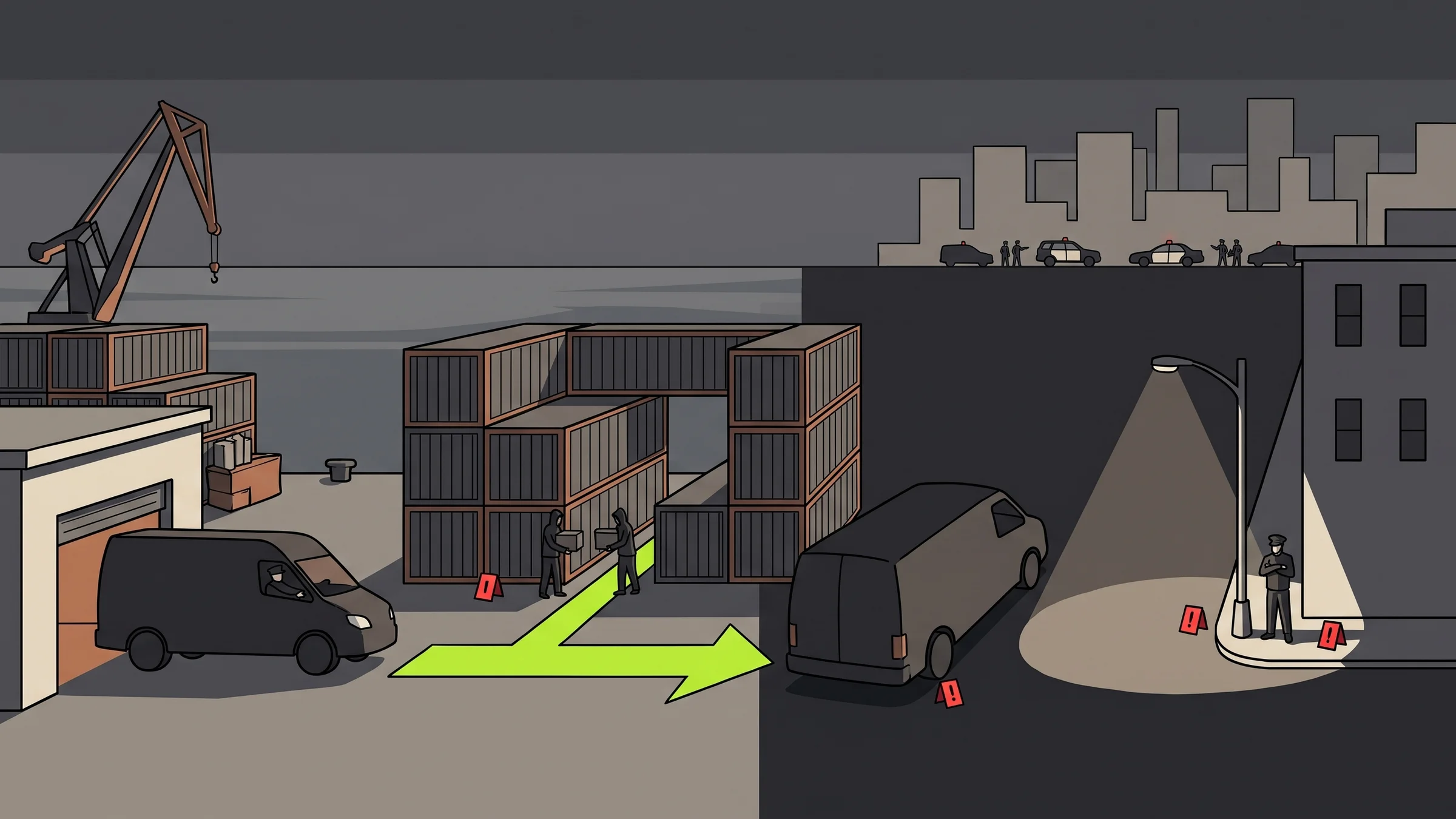
Crime games often divide legitimate business and underground work into separate menus. THUG uses one connected economy instead. The same shortage, employee, warehouse or vehicle can matter on both sides of your operation.
Goods have a history
Inventory does not appear as an anonymous number. Product batches carry quantity, quality, acquisition cost, source and risk as they move through the city. A shipment can be delayed, seized, stolen or delivered into a specific storage location.
That provenance creates decisions after the purchase. High-margin stock may also be too hot to sell openly. Cheap supply can become expensive when transport, concealment and losses are included.
Businesses are operations, not timers
A legal business needs stock, staff, payroll, security and working capital. Local demand and wider city conditions shape revenue. A capable manager can reduce attention, but the business still depends on the people and supply chain around it.
Some locations also create strategic value beyond their sales. Storage, transport access, a suitable customer base or a hidden operational space can support a wider network.
- Suppliers and lead times affect availability
- Staff ability changes performance
- Security changes loss and evidence risk
- Finance accelerates growth but adds fixed obligations
Dirty cash is not the end of the transaction
Underground sales generate money that carries different constraints from clean funds. Storage creates seizure risk, distribution creates obligations and laundering costs time and capacity.
A profitable illegal route therefore creates new management work. You must decide where funds sit, how quickly they move and which legitimate operation can absorb them without creating an obvious pattern.
Police investigate connections
Evidence can connect people, vehicles, properties, shipments and financial behavior. Changing one part of an operation can reduce one risk while creating another. A faster route may expose a driver; a safer warehouse may increase transport distance.
This makes preparation useful even when nothing goes wrong. Good logistics, reliable people and clean records are strategic defenses—not decorative upgrades.
The strategic result
Because the economies share resources, growth becomes a question of allocation. The best driver can only be in one place. Cash used for inventory cannot also fund a property deposit. A business protected by your strongest people leaves another route exposed.
That tension is the core of THUG: every successful expansion creates a larger operation to understand, staff and defend.
Questions from the street
Are THUG businesses passive income?
No. Businesses rely on staff, inventory, suppliers, payroll, security and local demand, though capable managers can automate parts of an operation.
Does illegal stock remain traceable?
Yes. Product batches retain source, quality, cost and risk as they move through shipments, storage and sales channels.
Can legal businesses support illegal operations?
Some assets, people and capabilities overlap, but using them carelessly can create financial patterns, evidence and operational exposure.