Plan multi-stage heists that the resolver must honour
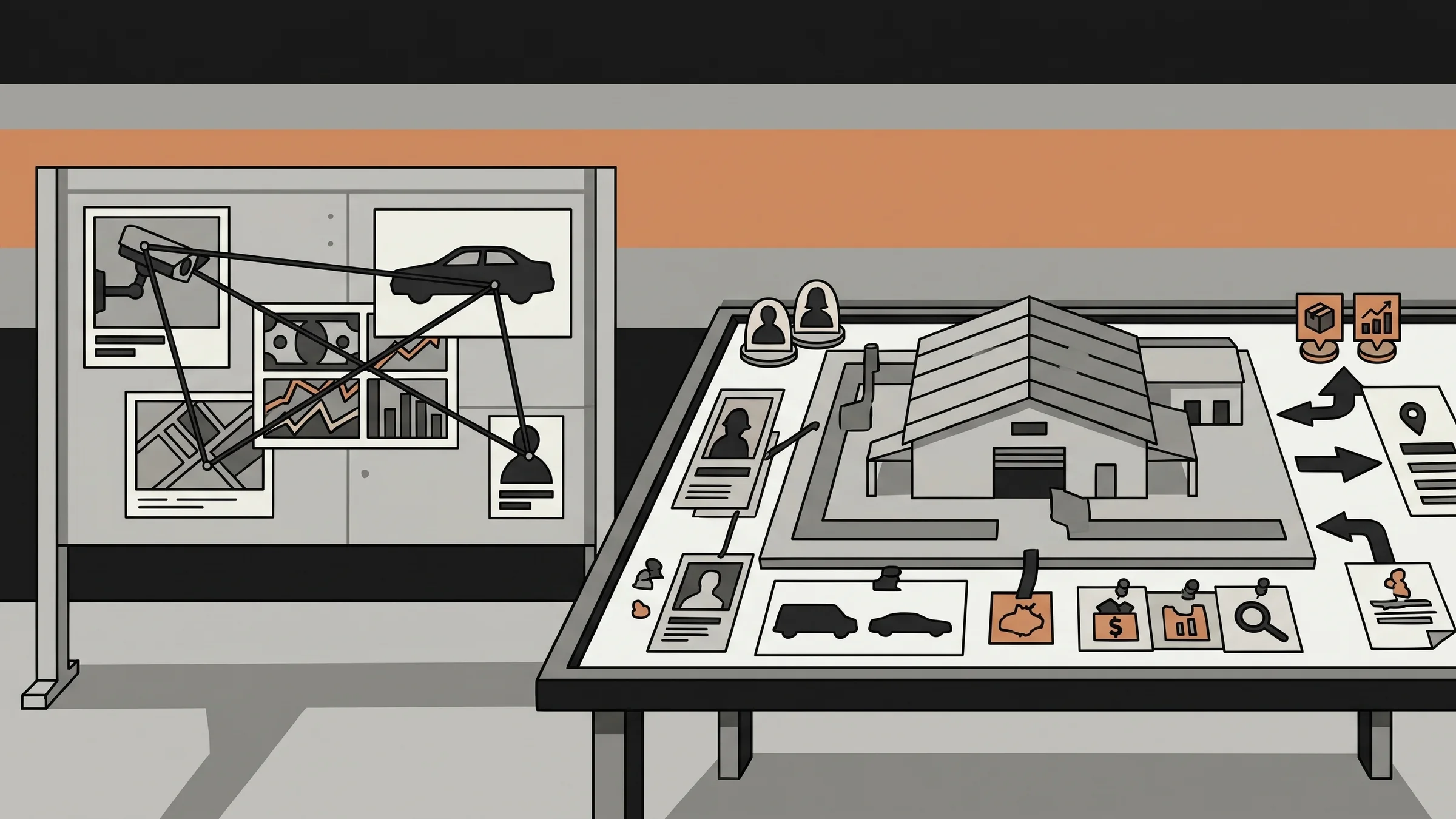
A heist is a campaign, not a button. You gather intelligence, divide roles, pick approaches and equipment, plan routes and contingencies, then commit. The resolver scores the plan you actually built—and the aftermath changes trust, evidence and heat.
Last reviewed 2026-07-23
From the live product.
Preparation changes odds
Approach, assigned skills, equipment, vehicles, rehearsal and contingencies determine readiness bands.
Every choice reaches the resolver
Roles, routes and contingencies are not flavour text—they reshape outcomes and failures.
Aftermath is gameplay
Loot hotness, witness patterns and financial behaviour feed investigations over time.
What you do, step by step.
- 1Open an opportunity dossier
- 2Collect intel on security and routes
- 3Assign crew roles and approaches
- 4Fund equipment and contingencies
- 5Commit, resolve, then manage trust and heat
Decisions become consequences.
- 1Discover and scout
- 2Plan and fund setup
- 3Commit the operation
- 4Divide loot and manage aftermath
- Private card game
- Cash office
- Warehouse intake
- Collector event
- Crew stash recovery
What to read next.
Know before you enter.
Can new players immediately run major heists?
No. Serious targets require reputation, money, equipment, people and preparation; early street jobs build toward them.
Does police heat matter after a heist?
Yes. Evidence, witnesses, vehicles, loot hotness and financial behaviour can build cases that require legal preparation and operational changes.
Is the planner cosmetic?
No. The resolver evaluates the plan the player built—approaches, roles, equipment and contingencies all change outcomes.
One connected game.
Living City
Discover THUG's persistent living city, where players, AI crews, businesses, markets and police keep acting while you are away.
Businesses
Crime business simulation in THUG: purchase, staff, inventory, day cycles, family tribute, hidden rooms, due diligence and a secondary resale market.
Crews
Build a crew, assign roles, govern a treasury and compete for districts, blocks and corners in THUG's territory strategy.
Build your first crew
No download required. Create your character and learn the city through guided street-level opening.
Start playing